Stranger School: Prank Games
- 4.6
- Rating
- 1.00M
- Installs
- Free
- Price
 Analysis by App-foxy
I approached Stranger School: Prank Games expecting a light school-themed simulation, but its real appeal is narrower and more focused: it turns small acts of mischief into short problem-solving challenges. You are not simply watching a prank unfold. You are trying to understand the situation, choose an amusing action, and see whether your timing and judgment produce the intended result. That simple loop gives the game a playful personality without asking for the long commitment of a large simulation.
My overall impression is positive, especially for players who enjoy humorous scenarios and quick experiments rather than deep management systems. The game is free to start, carries a Teen content rating, and comes from HyperFusion Games. It has reached over a million installs and holds a 4.6 average from roughly four thousand ratings, which fits my experience: this is an accessible, easy-to-understand game with a clear hook. Still, its narrow prank focus means it will not satisfy everyone looking for a substantial school simulator or a story-heavy adventure.
Why the prank-focused design matters
The most important capability here is the way the game makes prank planning the central activity. In many casual games, a funny theme is only decoration around tapping, collecting, or repeating a basic action. Here, the school setting gives the player a reason to observe what is happening and think about how a prank might work. That makes each small challenge feel more like a miniature setup than a routine button press.
You May Also Like

 Blood Strike: 2.5 Anniversary
Blood Strike’s Loadouts Turn Every Drop Into a Tactical Gamble
A close look at Blood Strike’s custom loadouts: how fast access to signature weapons reshapes its battle royale rhythm, rewards preparation, and narrows the gap between fights.

 Pandora - Music & Podcasts
Pandora’s Music Is Easy to Start, but Harder to Recover
Pandora’s strength is its low-effort path from a seed to a station. Its weak spot is how much confidence it asks you to place in connection, setup, and quiet recovery.

 8 Ball Pool
 Is Built on Rivalries, Rematches, and Routine
A close look at the rivalries, rematches, shared routines, and unanswered safety questions that turn a quick pool match into a persistent mobile community.

 Samsung Music
’s Quiet Strength Is Playing What You Already Own
Its reach comes less from spectacle than from dependable access to a personal library. That simplicity is both the app’s strongest retention engine and its ceiling.

 AccuWeather: Weather Radar
AccuWeather Review: A Quick, Clear Forecast for Everyday Decisions
For everyday plans, the best forecast is the one you can understand quickly. AccuWeather makes rain timing, radar, and local conditions easy to act on, with a few trade-offs.

 Hill Climb Racing
Why Hill Climb Racing Still Turns Crashes Into One More Run
A tiny car, a bumpy hill and one more upgrade: Hill Climb Racing keeps resurfacing because its simple chaos makes every near-miss feel personal.
More From Our News Desk



I like this approach because it gives the player a clear role. You are not building an entire campus, scheduling classes, or managing a complicated group of students. You are stepping into a mischievous situation and trying to make the moment land. The result is closer to a chain of comic puzzles than to a conventional simulation, even though the store category places it among simulation games.
That distinction is important before downloading. If you want a detailed school-life world with open exploration, character development, or long-term resource management, this is probably too focused. If you prefer short scenes in which the pleasure comes from noticing a possibility and testing it, the concept is much easier to appreciate.
The prank mechanic also creates a useful sense of cause and effect. A good attempt feels satisfying because the humor depends on your choice, not only on a passive animation. Even when a solution seems obvious afterward, the process of reaching it gives the scene a little more involvement than a standard casual level.
What I paid attention to while playing
The strongest moments come from treating every scene as a small observation exercise. Instead of tapping everything immediately, I found it better to look at the arrangement first and ask what the game appears to be inviting me to notice. That habit is more valuable than fast reactions. It also keeps the experience from becoming a blind search through every object on the screen.
This is one of the game’s less obvious strengths: it rewards a pause before action. Players who rush may still enjoy the comedy, but players who examine the situation can get more satisfaction from solving it. In that sense, the game works well for short breaks when I want something interactive but not mentally exhausting.
There is also a useful difference between playing for completion and playing for amusement. Completion-minded players will naturally focus on finding the intended solution. I found the game more enjoyable when I allowed myself to appreciate the setup and the payoff instead of treating each scene as a checklist. That change in attitude matters because the prank itself is the point, not just the progress after it.
How the idea works in practice
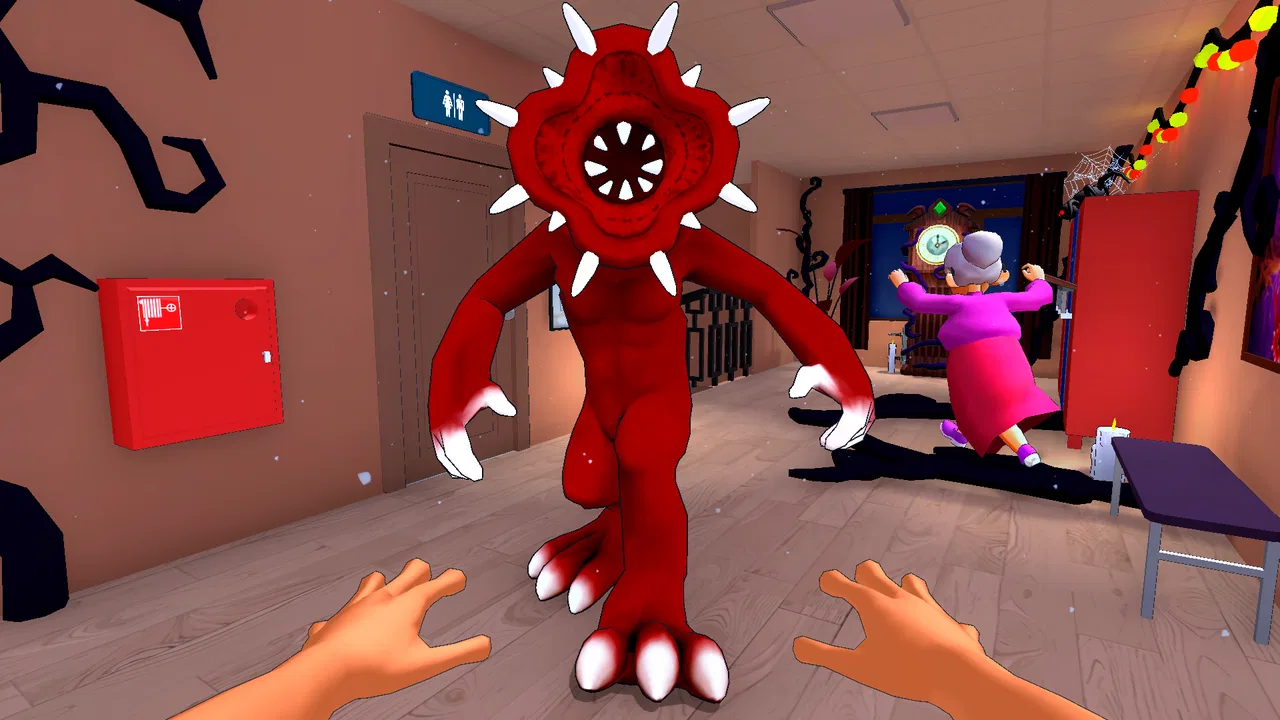
In practical use, the game’s loop is easy to understand: enter a school prank situation, inspect what is happening, make a choice, and watch the result. The simplicity makes it approachable for people who do not usually play simulation games. I did not need to learn a large collection of controls or memorize a complicated set of systems before enjoying the central idea.
The same simplicity can become a limitation. A prank challenge has a fairly narrow emotional range: it needs to be funny, surprising, or satisfying. If a particular scenario does not connect with your sense of humor, there may not be another layer of strategy to keep it interesting. This is why I see the game as best suited to casual sessions rather than as a single primary game for long evenings.
For a realistic everyday use case, imagine having a few minutes before an appointment or during a commute. This is the kind of game I would open when I want a self-contained distraction without committing to a multiplayer match or a long story chapter. I can focus on one school scenario, enjoy the outcome, and put the phone away without needing to remember a complicated plot.
It is also a reasonable choice for sharing a laugh with a friend. The situations are easier to discuss than a complex strategy game because the premise is immediately understandable: look at the school scene, identify the mischievous opportunity, and see what happens. I would not describe it as a cooperative social game, but its visual humor makes it suitable for showing someone a funny moment.
Small habits that improve the experience
My first practical tip is to avoid treating every object or character as something that must be tested instantly. Start by reading the scene visually. Look for the relationship between the people involved and the item or action that seems out of place. This reduces random tapping and makes the successful prank feel earned.
Second, when an attempt does not work, reconsider the goal rather than repeating the same action quickly. The intended joke may depend on sequence or context, so a failed first try can be useful information. I found that thinking about what the scene is trying to make me notice was more effective than simply searching for a hidden answer.
Third, use the game as a short-session experience instead of forcing a long play period. Its humor has more impact when the scenarios remain a small treat. Playing continuously can make the structure feel repetitive because the core activity stays centered on school mischief. Shorter sessions help preserve the surprise that makes the concept work.
Finally, if you are playing around younger family members, remember the Teen rating. The game’s prank theme may sound harmless, but the age guidance is a useful reminder that it is not positioned as a children’s title. I would check the screen myself before handing it to a younger player, particularly if the device is shared.
The best setting for this game
The game is at its best when you want a playful puzzle with a clear punchline. I would recommend it to someone who enjoys casual simulation titles but does not want spreadsheets, building queues, or detailed optimization. The school environment gives the challenges a recognizable backdrop, while the prank focus keeps the objective immediate.
It also works for players who like experimenting with game logic. The enjoyment is not only in seeing a funny result; it is in figuring out what the scene expects. That makes it a better fit for curious players than for people who want pure reflex action. You do not need to be highly competitive to get something from it.
On the other hand, I would skip it if your main reason for choosing a school game is realistic routine. This is not the right pick for simulating lessons, friendships, grades, or campus decisions. Its school setting is a stage for comic pranks, not a complete school-life model. A broader life simulation would be a better alternative for that kind of experience.
I would also look elsewhere if you need a game with a strong long-form narrative. The appeal here comes from individual situations and their immediate outcomes. Players who want character arcs, dramatic choices, or a large world to explore may find the experience too lightweight. That is not a flaw in the concept, but it is a clear boundary.
Tradeoffs behind the free entry point
Because the game is free, it is easy to try without making a commitment. That is a genuine advantage for a casual title: you can discover whether the humor and puzzle format suit you before deciding how much time you want to give it. The current version is 1.7.2, and the game supports Android 7.0 or later, so it is aimed at a broad range of compatible devices.
The tradeoff is the presence of in-app purchases, priced from $1.99 to $11.99 per item. I would keep that in mind if you are choosing the game for a child or using a shared device. The free download removes the initial cost, but optional purchases can still affect how you manage the experience. I recommend deciding in advance whether you are comfortable with those options rather than making an impulse purchase during play.
This payment structure also affects how I compare it with alternatives. A paid casual puzzle game may offer a cleaner one-time purchase experience, while another free simulation title may provide a broader world but use a different form of monetization. Stranger School sits between those models: it is convenient to try, but the player should remain aware that free access does not mean every part of the experience has the same cost.
Another tradeoff is depth versus immediacy. The game’s focused design means I can understand it quickly, which is excellent for short sessions. In exchange, it does not offer the same variety as a large sandbox or a full management simulation. I would choose it for quick comic problem-solving, not for a game that I expect to keep developing alongside me for months.
How it compares with familiar alternatives
Compared with traditional simulation games, this one is far less concerned with building systems over time. A city builder, life simulator, or school-management game usually asks me to plan resources, balance competing needs, and live with decisions across a longer timeline. Here, the focus stays close to the individual prank. That makes it easier to pick up, but also less demanding in the strategic sense.
Compared with ordinary puzzle games, the school setting gives the tasks more personality. The goal is not merely to move pieces or match patterns. The situation itself is part of the puzzle, and the humor depends on understanding the social setup. Players who enjoy context and visual comedy may prefer that over abstract challenges.
Compared with story-driven adventure games, the experience is more immediate and less emotionally involved. I do not choose it when I want a carefully unfolding plot. I choose it when I want a quick scenario with a mischievous objective. That makes it a useful companion to larger games rather than a replacement for them.
There is also a difference from action-oriented prank games. Fast action titles usually reward timing, speed, or avoiding detection in real time. Stranger School is more appealing when the fun comes from considering the situation. If your favorite part of a prank game is the planning and reveal, this approach should feel more natural. If you want frantic movement, it may feel slow.
Who gets the most from the design
The best audience is someone who likes casual games with a humorous premise, short scenarios, and light problem-solving. I would especially suggest it to players who want something more interactive than watching comedy but less demanding than a full strategy game. The Teen rating should be taken seriously when deciding whether it is suitable for a younger player.
It can also suit people returning to mobile gaming after a break. The central idea is easy to grasp, and there is no need to invest in a large fictional world before the game becomes enjoyable. A player can install it, understand the prank-centered format, and quickly decide whether the style matches their taste.
It is less suitable for players who dislike trial and error. Even a funny puzzle can become irritating if you expect every action to succeed immediately. The game asks for some patience and observation, so anyone who prefers direct instructions may have a better time with a more guided casual title.
I would also avoid recommending it as the only game for someone who wants deep progression. Its strongest quality is concentration, not breadth. The same focus that makes the pranks easy to approach limits how much variety the overall experience can provide. Knowing that before downloading prevents disappointment.
My final assessment after using it
Stranger School: Prank Games is most successful when treated as a compact prank-puzzle experience rather than a complete school simulator. HyperFusion Games has chosen a clear idea and built the appeal around recognizing a funny opportunity, making a choice, and enjoying the consequence. That gives the game a distinctive identity among casual simulation titles.
I appreciate the way it encourages observation instead of demanding speed, and I think the free starting point makes it easy to test. The main cautions are equally clear: the focused format may become repetitive for players seeking a large game, the Teen rating matters for family use, and the in-app purchase range deserves attention before playing on a shared device.
For me, the deciding question is simple: do you want a school world to manage, or a school situation to disrupt? If you want the first, choose a broader simulation. If you want the second, this game offers a cheerful, low-commitment way to spend a few minutes at a time. I would recommend giving it a try when you are in the mood for playful mischief, as long as you approach it for its focused humor and light puzzle thinking rather than expecting a deep life simulation.
FAQs for Stranger School: Prank Games
01What is Stranger School: Prank Games about?
Stranger School: Prank Games is a casual adventure and puzzle game centered on mischievous school-themed scenarios. Players explore different situations, interact with characters and objects, and complete prank-related challenges. The main appeal is experimenting with the environment to discover the correct actions, while avoiding mistakes that may cause the prank to fail. It is designed for lighthearted entertainment rather than serious simulation.
02Is Stranger School: Prank Games suitable for children?
The game uses cartoon-style visuals and playful humor, but parents should still review the content before allowing younger children to play. Some scenarios involve pranks, tricking characters and school-based mischief, which may not always encourage appropriate real-life behavior. The game is generally easy to understand, although age suitability can vary depending on a child’s sensitivity and the advertising or in-app content shown.
03Does Stranger School: Prank Games require an internet connection?
Many parts of Stranger School: Prank Games may be playable without a constant internet connection, especially when completing previously loaded levels. However, an internet connection can still be required for advertisements, updates, analytics, online features or restoring purchases. Availability may also differ between Android and iOS versions, so it is best to test the game offline after installation rather than assuming every feature works without internet access.
04Are there advertisements or in-app purchases in the game?
As with many free-to-download prank and puzzle games, Stranger School: Prank Games may include advertising, such as banners or videos displayed between levels. Some versions may also offer optional purchases or rewards. Before downloading, users should check the store listing for the current monetization details. Parents should use device purchase restrictions, since accidental taps on ads or paid items can occur during play.
05Is Stranger School: Prank Games easy to play for beginners?
The game is aimed at casual players and usually relies on simple touch controls, tapping objects, selecting actions and observing the results. The challenge comes less from complicated controls and more from figuring out the intended sequence for each prank. Some levels may require trial and error, so players who dislike repeated attempts could find certain puzzles frustrating. Overall, it is accessible for beginners who enjoy short interactive challenges.
Pros
- Quick
- casual levels that are easy to start and play.
- Humorous prank scenarios offer lighthearted entertainment.
- Simple controls make the game accessible to younger players.
- Short challenges work well for brief gaming sessions.
- Cartoon-style visuals give the game a playful presentation.
Cons
- Some puzzles may feel repetitive after extended play.
- Frequent ads can interrupt the flow between levels.
- The humor may not appeal to players seeking deeper gameplay.
- Limited challenge could disappoint experienced puzzle fans.
- Progress may depend on watching ads or optional purchases.

Stranger School: Prank Games
Gallery